A new scientific study published in the prestigious journal Nature, titled “Mapping pesticide-induced metabolic alterations in human gut bacteria“, has revealed something important about the way common pesticides might affect the bacteria living in your gut and possibly your health too. But as always with science, a single study does not prove anything and is only part of the puzzle. Do pesticides affect gut microbiome is a question on peoples mind as we learn more about how our gut health is closely linked with our general wellbeing and a range of diseases.
What the Study Looked At
Scientists wanted to understand how the chemicals we use to kill pests (pesticides) might be influencing the tiny bacteria that live inside our digestive systems. These bacteria, called the gut microbiome, help us digest food, make vitamins, and even influence our brain and immune system.
To test this, researchers took different types of human gut bacteria and exposed them to a range of commonly used pesticides in a lab. They watched how these bacteria changed, especially in the kinds of chemicals they produced which are called metabolites, and they are a big part of how bacteria interact with our bodies.
What They Found
- Bacteria changed their behavior: When exposed to pesticides, the bacteria stopped making some normal chemicals and started making others. These changes were different depending on the type of pesticide and the specific bacteria involved.
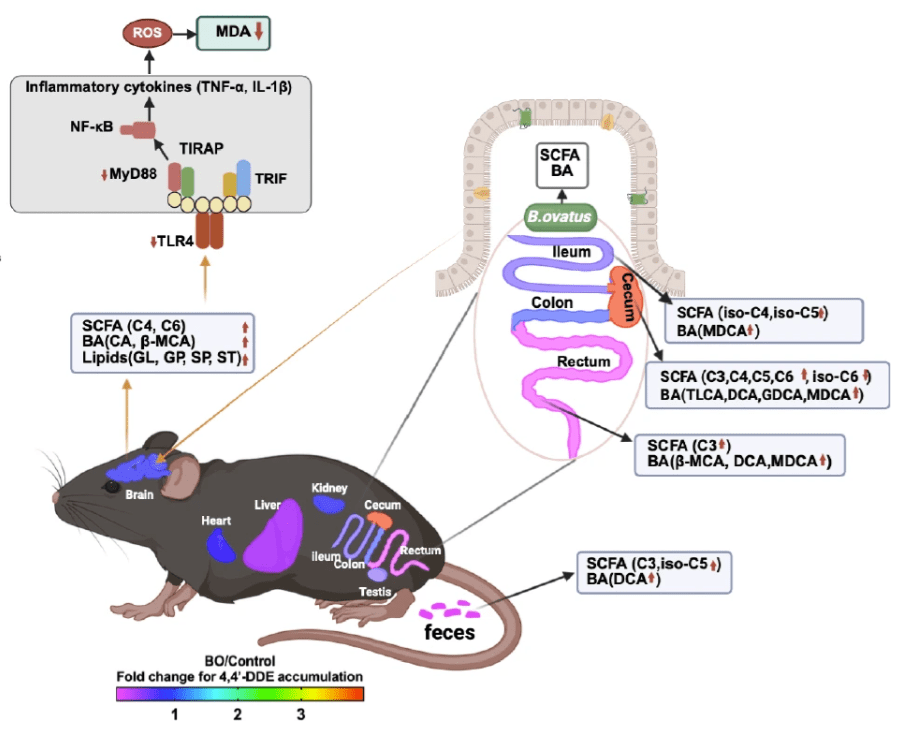
- Tryptophan got disrupted: One of the biggest changes was in how the bacteria handled tryptophan. Tryptophan is an important building block that our bodies use to make things like serotonin, a brain chemical that helps regulate mood, sleep, and digestion. Changes in this pathway could have effects beyond the gut.
- In mice, inflammation increased: When scientists looked at the effects of these bacterial changes in mice, they found signs of inflammation. This suggests that disrupting gut bacteria with pesticides could potentially lead to health issues in the host — in this case, the mice.
Putting the New Research Into Context
Here’s where the “Caveat Scientia” part comes in for understanding what the research does and does not prove:
- This was mostly a lab study: Most of the testing happened in petri dishes or carefully controlled lab environments, not in real people living normal lives. Bacteria in the human gut are part of a much more complex ecosystem.
- Different people have different gut bacteria: The study only used a few bacterial strains. Your gut microbiome is made up of hundreds of types, and they’re all different depending on your diet, genetics, and environment.
- Pesticide doses were controlled: The amount of pesticide used in the lab might not be the same as what people actually get exposed to through food or the environment. We are still exploring if everyday levels of exposure have the same effects.
What This Means Going Forward
This study doesn’t prove that pesticides are definitely causing harm to our gut health in everyday life. But it does open the door to new questions that need answers. For example:
- How exactly might pesticides affect the gut bacteria in humans.
- Could long-term, low-level pesticide exposure quietly change how our gut bacteria work?
- Might that increase the risk for diseases tied to gut health, like inflammatory bowel disease, depression, or autoimmune disorders?
- Could some pesticides be safer for the microbiome than others?
The Bottom Line
This research adds to a growing understanding that the gut microbiome is sensitive to more than just food or antibiotics, and chemicals in our environment might be part of the picture too.
It is certainly part of a growing body of evidence that supports the fact that pesticides in our food and environment have an effect on our internal gut microbiome.
As always, be cautious about over-interpreting a single study. Science builds slowly, piece by piece. And this study is one more puzzle piece that might help us better understand the hidden connections between our environment, our microbes, and our health.