Myth Busting & Popular Science

How false “facts” become common knowledge, why they survive being debunked, and the one thing that dissolves them.

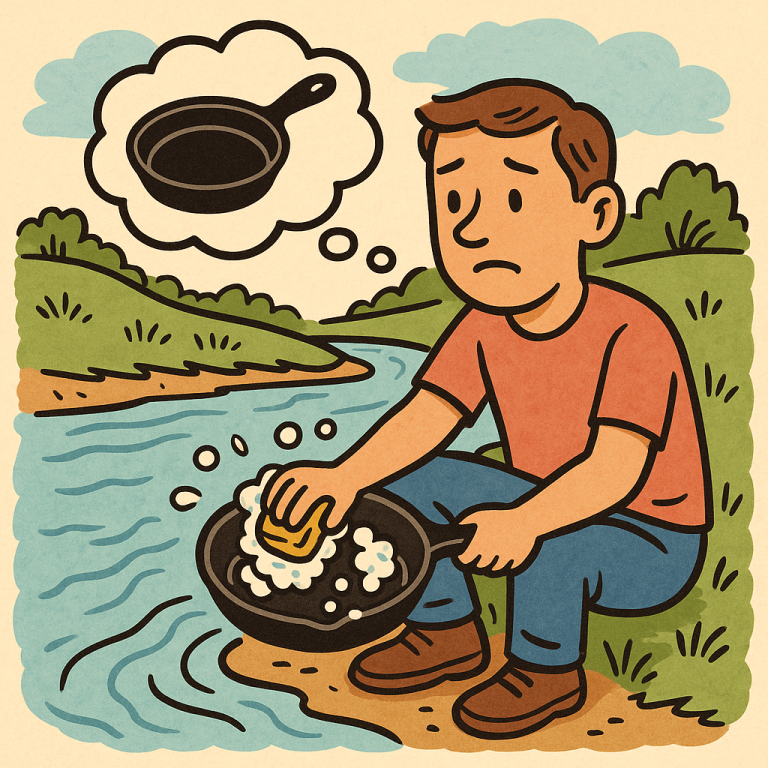
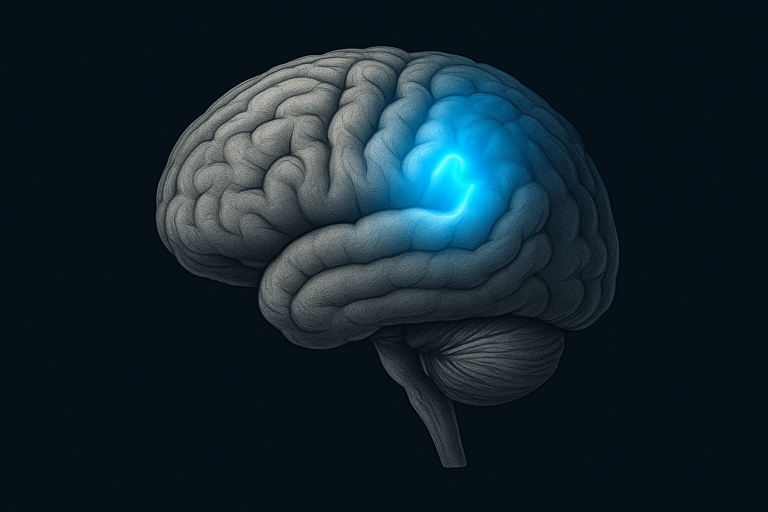
You only use ten percent of your brain. Dogs see the world in black and white. A little soap will ruin a cast-iron pan. Read those three sentences and something in you nods along, because you have heard each of them dozens of times, from people who had no reason to lie. All three are false.

That is not the interesting part. The interesting part is why you believed them, and why you will probably keep half-believing them even now that you have been told otherwise. These are not obscure errors. They are confident, tidy, universally repeated claims that happen to be wrong, and the reason they spread has almost nothing to do with intelligence.

It has to do with a gap. Not a personal failing, but the ordinary human condition of not having a deep model for most of what we know. Nobody understands everything; experts fall for myths the moment they step outside their field. And into that gap, a certain kind of claim fits perfectly: clean, memorable, and just plausible enough not to question. This page is about how those claims are made, how they travel, and why the antidote is never a better fact to memorize. It is understanding the thing underneath.

Topic clusters

The Myth

Science hands down facts. A "theory" is a guess, things get "proven," and settled means settled forever.

The Reality

A scientific theory is the strongest thing there is, an explanation that has survived repeated attempts to break it, not the weakest. Nothing gets "proven"; evidence just piles up until a conclusion is overwhelming, while staying open in principle. One study is a puzzle piece, not a verdict, and replication is where confidence actually comes from. Once you expect science to be provisional and cumulative, a reversed finding stops looking like a scandal and starts looking like the system working.

Scientist examining cell cultures in a laboratory, contrasting lab results with results in humans
Why Lab Studies Mislead Us About Medical Breakthroughs
Modern human and chimpanzee shown as relatives that share a common ancestor
Why Humans Didn’t Evolve From Monkeys: The Truth About Our Origins
Plate of traditional African Heritage Diet foods such as beans, leafy greens and whole grains
Is The African Diet the New Mediterranean Diet?
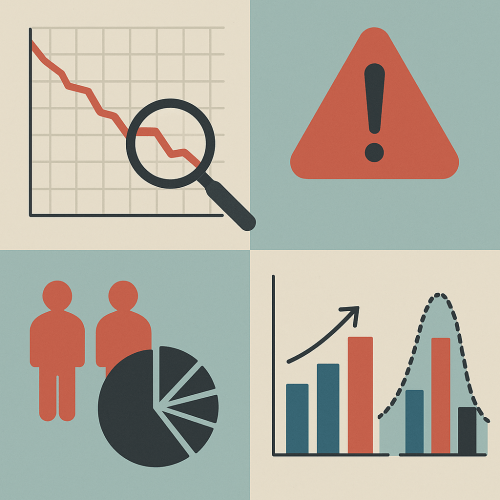
Alarming health statistic in a news headline, showing how risk figures can mislead readers
Why That Scary Statistic Might Not Mean What You Think
Bottles of seed oils such as canola and sunflower oil on a kitchen counter
The Truth About Seed Oils and Health: You May Be Surprised!
Stack of newspapers, representing how the media reports scientific research
How Media Misrepresents Scientific Research: Key Misconceptions
Doctor working alongside an AI system on a digital screen
Can AI Replace Doctors? What the Latest Research Reveals
Glass being filled with tap water from a kitchen faucet
Fluoride Exposure and Children’s IQ: What a Major New Study Reveals
Fresh oranges and citrus fruit, a common source of vitamin C
The Truth About Vitamin C and the Common Cold

The Myth

Science hands down facts. A "theory" is a guess, things get "proven," and settled means settled forever.

The Reality

A scientific theory is the strongest thing there is, an explanation that has survived repeated attempts to break it, not the weakest. Nothing gets "proven"; evidence just piles up until a conclusion is overwhelming, while staying open in principle. One study is a puzzle piece, not a verdict, and replication is where confidence actually comes from. Once you expect science to be provisional and cumulative, a reversed finding stops looking like a scandal and starts looking like the system working.

The Myth

A habit is either "totally fine" or "will kill you." Headlines swing between "a glass of wine is good for you" and "no amount is safe."

The Reality

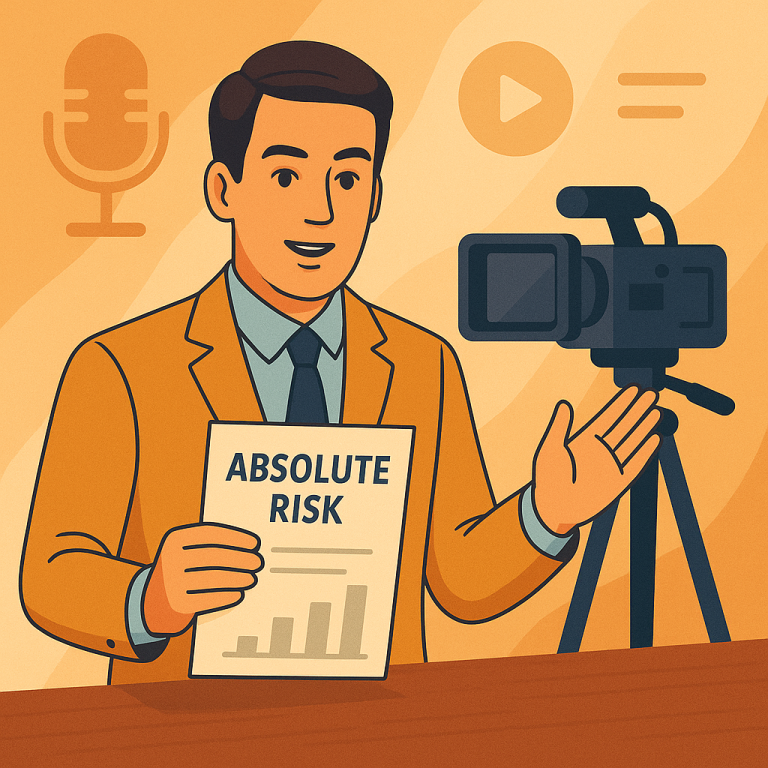
The useful question is always how much, and how much risk, in absolute terms.

The Myth

A habit is either "totally fine" or "will kill you." Headlines swing between "a glass of wine is good for you" and "no amount is safe."

The Reality

The useful question is always how much, and how much risk, in absolute terms.

The Myth

A habit is either "totally fine" or "will kill you." Headlines swing between "a glass of wine is good for you" and "no amount is safe."

The Reality

The useful question is always how much, and how much risk, in absolute terms.

The Myth Lifecycle

None of this needs a science degree. It needs a shift in posture: from “what’s the answer?” to “how good is the evidence, and how would I know?” That’s what science literacy really is, a way of holding a claim at arm’s length long enough to look at it. The payoff is practical. You get harder to frighten, harder to sell to, and better at telling a finding worth acting on from one worth merely noting. In a world built to provoke fast reactions, a few good questions is close to a superpower.

Step 1

Born

A real fact or reasonable idea gives the myth its kerel of plausibility

Step 2

Simplified

The caveats are stripped so a clean, memorable story can travel

Step 3

Hardened

Sheer repetition converts familiarity into felt truth

Step 4

Resistant

The lodged belief survives correction; a bare fact cannot dislodge it

Below, we walk each stage in turn, using one myth as a guide the whole way: The belief that we use only ten percent of our brains

Step 1

Born: the kernel of truth

Very few myths are invented from nothing. Nearly all of them start from something real, a genuine fact or a reasonable inference, which is exactly what gives them their staying power. A pure fabrication is easy to dismiss. A distortion of something true feels credible because, at its root, it is.

The ten-percent myth grew from two real seeds. The psychologist William James genuinely argued, around 1907, that people meet only a fraction of their mental potential, a perfectly reasonable observation about motivation and willpower. Separately, early neuroscience found that glial cells vastly outnumber neurons, which a non-specialist could easily misread as “most of the brain isn’t doing anything.” Two true-ish facts, no myth yet. But the raw material was now lying around.

You see the same origin in the kitchen and the orchard. The warning against soap on cast iron was once sound, back when soap meant harsh lye that really could strip a pan. Apple seeds genuinely do contain a compound that releases cyanide. The seed of every good myth is a fact that has not yet been mangled.

This is why the most stubborn myths are almost never the most outlandish ones. A claim with no grounding at all gets laughed off; a claim with a real fact at its center gets a pass, because part of it checks out. The kernel acts as a credential. When you go looking for where a myth came from, you are usually not looking for a lie someone invented. You are looking for a truth someone stopped explaining halfway through.

The understanding gap, stage one: Without the deeper context, a true fact and a false conclusion drawn from it look identical.

Step 2

Simplified: the clean story wins

A kernel of truth is usually hedged, conditional, and a little boring. “Dogs have dichromatic vision weighted toward blue and yellow” is accurate and forgettable. “Dogs see in black and white” is wrong and unforgettable. In the contest between a precise caveat and a tidy story, the tidy story wins almost every time, because it is easier to hold, repeat, and pass on.

Watch it happen to the brain myth. In 1936, the writer Lowell Thomas, introducing Dale Carnegie’s wildly popular self-help book, compressed James’s careful point about untapped potential into a single crisp sentence: that the average person develops only ten percent of his latent mental ability. James never said that. The nuance about motivation was gone, a precise-sounding number had appeared from nowhere, and it was pinned to a Harvard name for authority. The hedged truth had become a clean lie, and the clean version is the one that travels.

The simplification is rarely malicious. It is what happens when a claim passes through people who are summarizing in good faith, each dropping the caveat that felt least important to them. Precision is heavy to carry and easy to set down. A number sounds more authoritative than a range, a flat statement more quotable than a conditional one, and the version that survives each retelling is the one that was easiest to remember, not the one that was most accurate. Simplification is a filter, and it filters for stickiness, not truth.

The understanding gap, stage two: A reader without the underlying model cannot feel what the simplification threw away. The loss is invisible, so the clean version seems like the whole truth.

Step 3

Hardened: repetition becomes truth

Here is the stage that does the real damage, and it is backed by decades of psychology. Repetition alone makes a statement feel true. Cognitive scientists call it the illusory truth effect, and its findings are unsettling: repeated claims are rated as truer even when they are implausible, even when they contradict what you already know, and the effect works on the educated and the expert just as well as on anyone else. Familiarity is doing the work, not evidence. “I’ve heard that before” quietly becomes “that must be true.”

The brain myth had this in abundance. It circulated through the self-help movement of the 1920s, appeared in a 1929 almanac advertisement asserting that scientists say we use about ten percent of our brain power, and eventually became a Hollywood premise. Each repetition added no evidence whatsoever and a great deal of conviction. By the time you first heard it, it did not arrive as a claim to evaluate. It arrived as a fact everybody already knew.

What took the brain myth decades now takes days. Recommendation algorithms are, at their core, repetition engines: they surface what already gets a reaction, and a tidy myth reliably gets one. The same false claim arrives from a dozen accounts, in a dozen phrasings, and the sheer volume reads as consensus. Worse, repetition does not just raise belief; it raises willingness to share, which produces more repetition. The loop is self-feeding, and it does not care in the slightest whether the thing being amplified is true.

The understanding gap, stage three: When you have no deeper model, familiarity is the only cue to truth you have left. Repetition fills the gap that understanding would otherwise occupy.

Step 4

Resistant: why debunking barely dents it

You would think a clear correction would end the matter. It rarely does. Once a false belief is lodged, it keeps influencing how people reason even after they accept that it is wrong, a well-replicated finding called the continued influence effect. Corrections reduce the damage; they do not erase it. The old belief lingers in the background and keeps getting retrieved.

It is worth being honest about a wrinkle here, since honesty is the point of this whole site. There was a popular stronger claim, the “backfire effect,” holding that corrections can make false belief worse. That finding itself largely failed to replicate. Large studies now find that corrections usually do move people toward the truth, just incompletely. So even the science of why myths persist contained a myth that had to be walked back, which is the lifecycle demonstrating itself on the people who study it.

Why is a bare correction so weak? Because it swaps one isolated fact for another. “Actually, you use all of your brain” is just a new sentence to file next to the old one, and the old one has a decades-long head start on familiarity. What a correction almost never supplies, and what the reader still lacks, is the deeper model that would make the truth feel obviously right and the myth feel obviously wrong.

The corrections that do stick share one feature: they replace the myth with a better story, not just a denial. Telling someone the ten-percent figure is false does little. Explaining what the other ninety percent is actually doing, every region mapped, every part active, the brain so metabolically expensive that evolution would never carry that much dead weight, leaves nothing for the myth to reoccupy. That is the difference between being corrected and understanding. One is a patch; the other rebuilds the ground the myth was standing on.

The understanding gap, stage four: A corrected fact without understanding is just as fragile as the myth it replaced. Only a working model is self-correcting.

How we Evaluate claims

We weigh evidence by quality, not by how striking the finding is: human trials over animal or lab work, replicated results over single studies, and effect sizes in absolute terms over dramatic percentages. We name our uncertainty rather than hide it, we disclose who funded the research, and when the evidence changes, we change with it, visibly.

The Takeaway

If you take away a list of corrected facts from this page, we have half-failed, because a corrected fact is just a fresh myth waiting for the same lifecycle to claim it. The thing worth keeping is the posture: when a fact feels a little too clean, ask what it was simplified from, and whether you actually understand the why underneath or only recognize the words.

That is what the tagline means. Not more facts, deeper understanding. It is the one thing the myth lifecycle cannot survive, and it happens to be the only thing that makes the real explanation, which is nearly always stranger and better than the myth, finally stick.
Frequently asked questions

What is the Myth Lifecycle?

A four-stage pattern for how false “facts” spread: they are born from a kernel of truth, simplified into a clean story, hardened by repetition, and made resistant to correction. The common thread is a gap in understanding that each stage exploits.
Because of the continued influence effect: once a false belief is lodged, it keeps shaping how we reason even after we accept it’s wrong. A bare correction swaps one isolated fact for another without supplying the deeper understanding that would make the truth stick.


Yes. The illusory truth effect is well documented: repeated claims are rated truer even when they’re implausible or contradict what you know, and the effect works on experts too. Familiarity, not evidence, is doing the work.
No. Brain imaging shows nearly all of the brain is active across a day. The myth grew from a real idea about untapped potential, was simplified into a false precise figure in the 1930s, and hardened through decades of repetition.
It can be, which is why this site aims at understanding rather than a list of corrected facts. The goal isn’t to hand you better myths to repeat; it’s to build the models that let you evaluate claims yourself.

Unlock This Free eBook

Enter your email to receive this resource directly in your inbox. We’ll send you a secure download link instantly.