“The hardest part of understanding science isn't the science. It's how we were taught to think about it.”
Many misunderstandings about scientific claims come from missing this point. It is why one study makes headlines and is later overturned, or why articles claim “coffee saves you” one week and “coffee can kill you” the next.
Scientific research usually examines a specific question within a specific context. Problems arise when limited findings are turned into broad conclusions, probabilities are treated as certainties, and a single result is presented as a final verdict. Clickbait headlines and algorithms often make this worse.
This Scientific Literacy & Critical Thinking page is designed to help you approach science more thoughtfully by understanding common logical fallacies, recognising misleading claims, and learning better ways to evaluate scientific evidence.

Topic clusters
The Myth
Science hands down facts. A "theory" is a guess, things get "proven," and settled means settled forever.
The Reality
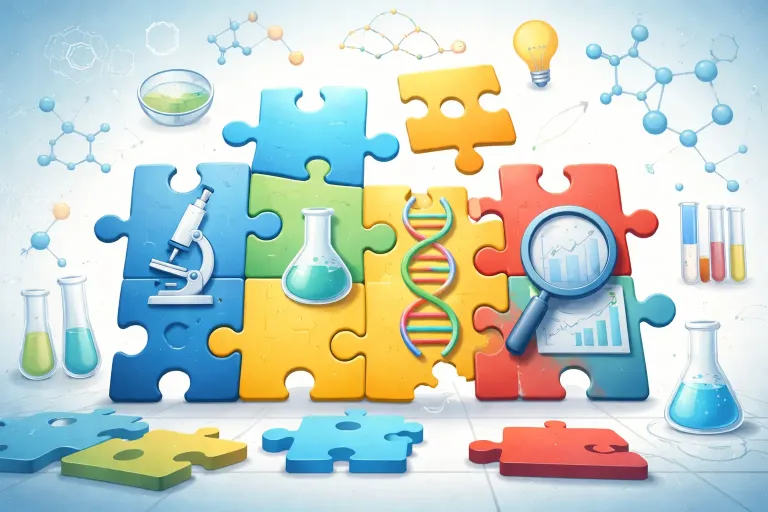
A scientific theory is the strongest thing there is, an explanation that has survived repeated attempts to break it, not the weakest. Nothing gets "proven"; evidence just piles up until a conclusion is overwhelming, while staying open in principle. One study is a puzzle piece, not a verdict, and replication is where confidence actually comes from. Once you expect science to be provisional and cumulative, a reversed finding stops looking like a scandal and starts looking like the system working.

The Myth
Science hands down facts. A "theory" is a guess, things get "proven," and settled means settled forever.
The Reality
A scientific theory is the strongest thing there is, an explanation that has survived repeated attempts to break it, not the weakest. Nothing gets "proven"; evidence just piles up until a conclusion is overwhelming, while staying open in principle. One study is a puzzle piece, not a verdict, and replication is where confidence actually comes from. Once you expect science to be provisional and cumulative, a reversed finding stops looking like a scandal and starts looking like the system working.
The Myth
A habit is either "totally fine" or "will kill you." Headlines swing between "a glass of wine is good for you" and "no amount is safe."
The Reality
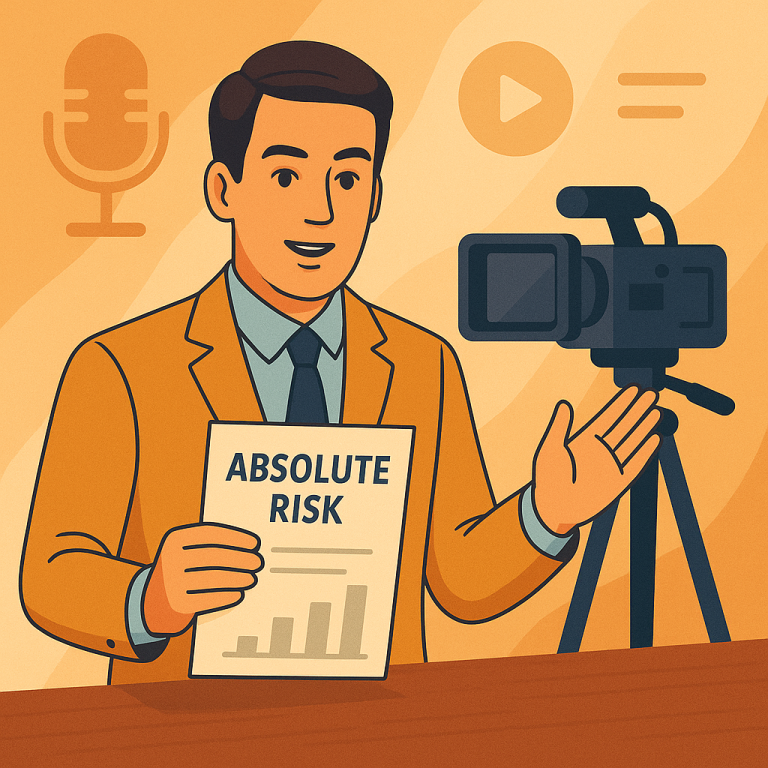
The useful question is always how much, and how much risk, in absolute terms.
The Myth
A habit is either "totally fine" or "will kill you." Headlines swing between "a glass of wine is good for you" and "no amount is safe."
The Reality
The useful question is always how much, and how much risk, in absolute terms.
The Myth
A habit is either "totally fine" or "will kill you." Headlines swing between "a glass of wine is good for you" and "no amount is safe."
The Reality
The useful question is always how much, and how much risk, in absolute terms.
New to this? Start here
Where we might be wrong
“The evidence is weak” is not “the claim is false.”
It’s easy to slide from one to the other, and we sometimes do. Absence of good evidence often just means nobody has run the right study yet.
Demanding certainty can become its own paralysis.
You still have to eat, exercise, and take medicine while the evidence is incomplete. Waiting for perfect proof is itself a decision, and not always the safe one.
Reflexive debunking can miss the real thing.
Some popular claims turn out to be true. Treating every trend as nonsense is just credulity pointed the other way, and it’s a habit worth guarding against.
How we Evaluate claims
We weigh evidence by quality, not by how striking the finding is: human trials over animal or lab work, replicated results over single studies, and effect sizes in absolute terms over dramatic percentages. We name our uncertainty rather than hide it, we disclose who funded the research, and when the evidence changes, we change with it, visibly.
The Takeaway
None of this needs a science degree. It needs a shift in posture: from “what’s the answer?” to “how good is the evidence, and how would I know?” That’s what science literacy really is, a way of holding a claim at arm’s length long enough to look at it. The payoff is practical. You get harder to frighten, harder to sell to, and better at telling a finding worth acting on from one worth merely noting. In a world built to provoke fast reactions, a few good questions is close to a superpower.